


What Do C&I Customers Really Expect from DPPA Combined with BESS?

1. From the Demand for Green Electricity to the Need for a Bankable Energy Solution
Over the past few years, the demand for renewable electricity among commercial and industrial (C&I) customers in Vietnam has evolved rapidly from a "nice-to-have" initiative into a strategic business imperative. This shift is driven not only by ESG commitments, Net Zero targets, and RE100 initiatives, but also by increasingly stringent requirements from global supply chains. Today, manufacturers are expected to demonstrate measurable decarbonization progress through verifiable data, proven operational practices, and practical energy solutions that deliver tangible results.
However, when companies move beyond the aspiration of using green electricity to making actual investment decisions, the key question is no longer simply whether the electricity is renewable. What businesses need is an energy framework that is commercially viable, operationally reliable, and sufficiently transparent to be incorporated into long-term production planning, financial forecasting, and business operations. Against this backdrop, the question of "What do C&I customers expect from DPPA combined with BESS?" is no longer merely a technological discussion; it has become a market-driven question.
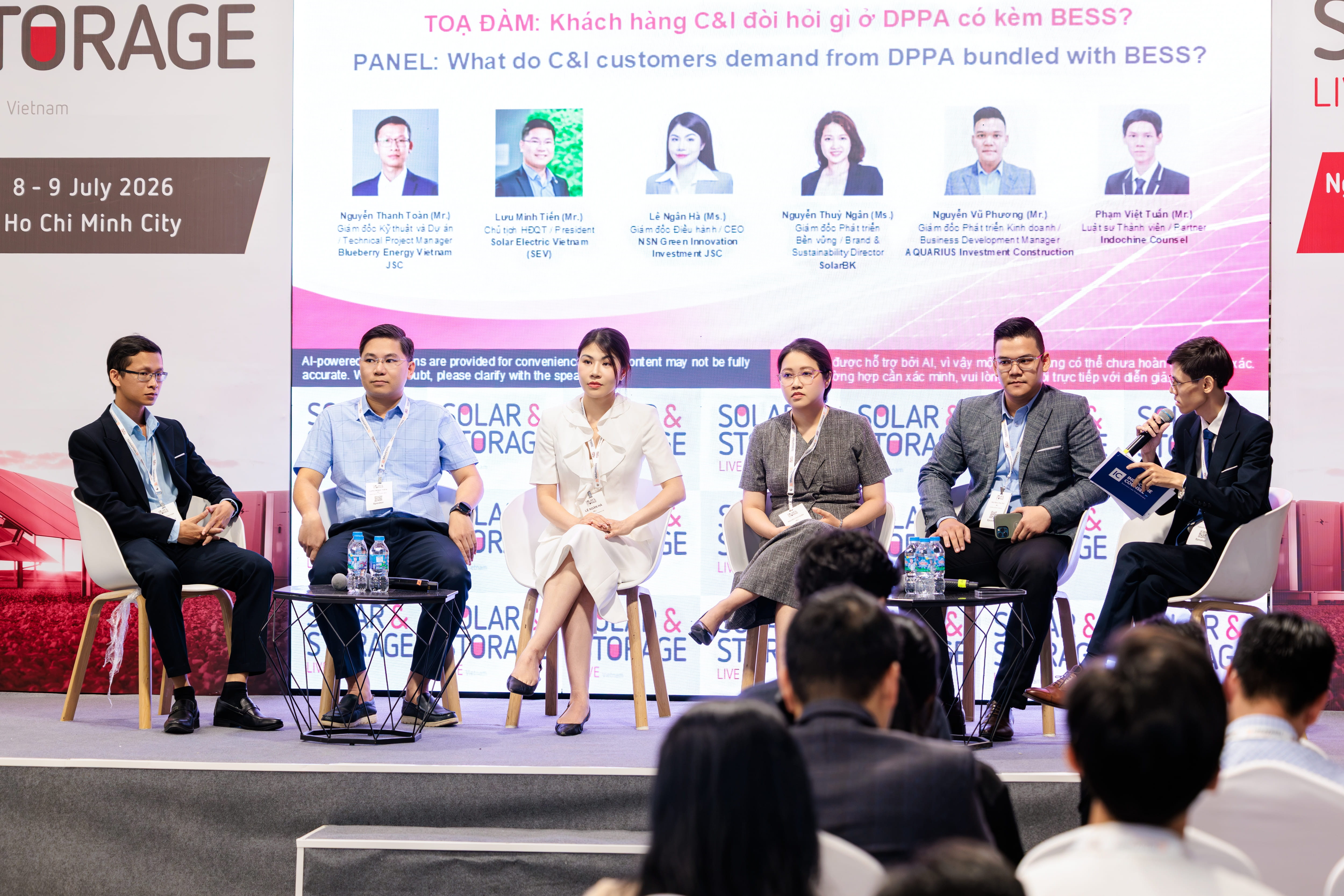
This topic was extensively discussed during the DPPA & BESS Conference at Solar & Storage Live Vietnam 2026, held in Ho Chi Minh City on 8–9 July 2026. Perspectives shared by investors, project developers, engineering consultants, sustainability experts, and EPC contractors all pointed to one common conclusion: C&I customers are not buying technology, they are buying certainty.
That certainty encompasses several critical aspects:
- Can future energy costs be forecast with confidence?
- Will the system operate reliably throughout its lifecycle?
- Are responsibilities and risks clearly allocated among all stakeholders?
These considerations increasingly outweigh the technology itself when companies evaluate renewable energy investments.
2. BESS and DPPA Create Value Only When They Solve Real Operational and Cost Challenges
From a practical implementation perspective, a fundamental shift is taking place in how businesses evaluate energy projects. In the past, many manufacturers considered rooftop solar or battery energy storage primarily through one lens: How much can it reduce electricity bills? Today, however, the equation has become far more sophisticated.
C&I customers are no longer focused solely on lowering energy consumption (kWh). They also need to manage electricity costs during peak-demand periods, minimize the risk of production interruptions, maintain power quality for sensitive manufacturing processes, and ensure that renewable electricity consumption can be accurately documented for carbon accounting and sustainability reporting. As a result, companies are no longer purchasing standalone technologies. Instead, they are investing in integrated energy solutions whose value can be measured through both commercial performance and operational reliability.
Viewed from this perspective, Battery Energy Storage Systems (BESS) are no longer simply an add-on to solar power systems. Their true value lies in addressing the specific operational challenges faced by each manufacturing facility. Depending on the plant's operating profile, BESS may help to:
- reduce peak demand (Pmax);
- smooth the facility's load profile;
- lower electricity costs during peak pricing periods;
- increase on-site consumption of solar-generated electricity; and
- improve power supply resilience for production lines that require a highly stable electricity supply.
The key point is that these benefits must always be evaluated within the context of each facility's unique operating conditions. There is no universal formula that applies to every project.
Every BESS deployment is inherently case-specific, depending on factors such as production schedules, load characteristics, process sensitivity, electricity tariff structures, and the company's risk tolerance. This was one of the strongest points of consensus among the panelists: the value of BESS cannot be assessed in isolation from a factory's overall energy strategy.
The same principle applies to the Direct Power Purchase Agreement (DPPA). This mechanism allows large electricity consumers to purchase renewable electricity directly from renewable energy generators such as solar, wind, or biomass power plants. For C&I customers, DPPA only becomes meaningful when it is viewed not merely as a power purchase contract, but as a commercial framework that enables renewable electricity procurement in a way that is practical, financeable, and operationally feasible.
The issuance of Decree No. 243/2026/ND-CP on 26 June 2026, amending Decrees No. 57/2025/ND-CP and No. 58/2025/ND-CP, has provided greater clarity on several important aspects of Vietnam's DPPA framework. These include:
- the role of the National Power System and Market Operator (NSMO) in reviewing eligibility requirements and technical acceptance;
- the self-certification mechanism for Commercial Operation Date (COD) following technical acceptance;
- the eligibility of large electricity consumers within industrial parks to participate independently in the DPPA mechanism;
- the ability to aggregate multiple electricity consumption sites under a single contract when the same power corporation serves them; and
- the proposed increase in the allowable sale of surplus electricity from the current 20% to 50% in the future.
Together, these developments indicate that Vietnam's DPPA framework is evolving from a high-level policy mechanism into a commercially practical instrument that is increasingly aligned with market realities.
3. Market Demand Is Strong, but Businesses Still Need Greater Commercial Certainty
Although market interest in renewable electricity continues to grow, it would be premature to conclude that the market is fully mature. The biggest obstacles today are no longer whether businesses are willing to adopt green electricity. Instead, they revolve around three fundamental questions:
- Are total project costs sufficiently transparent to support long-term production planning?
- Do contractual arrangements provide an appropriate balance of risks over the project's lifetime?
- Can all participating stakeholders coordinate effectively throughout project implementation and operation?
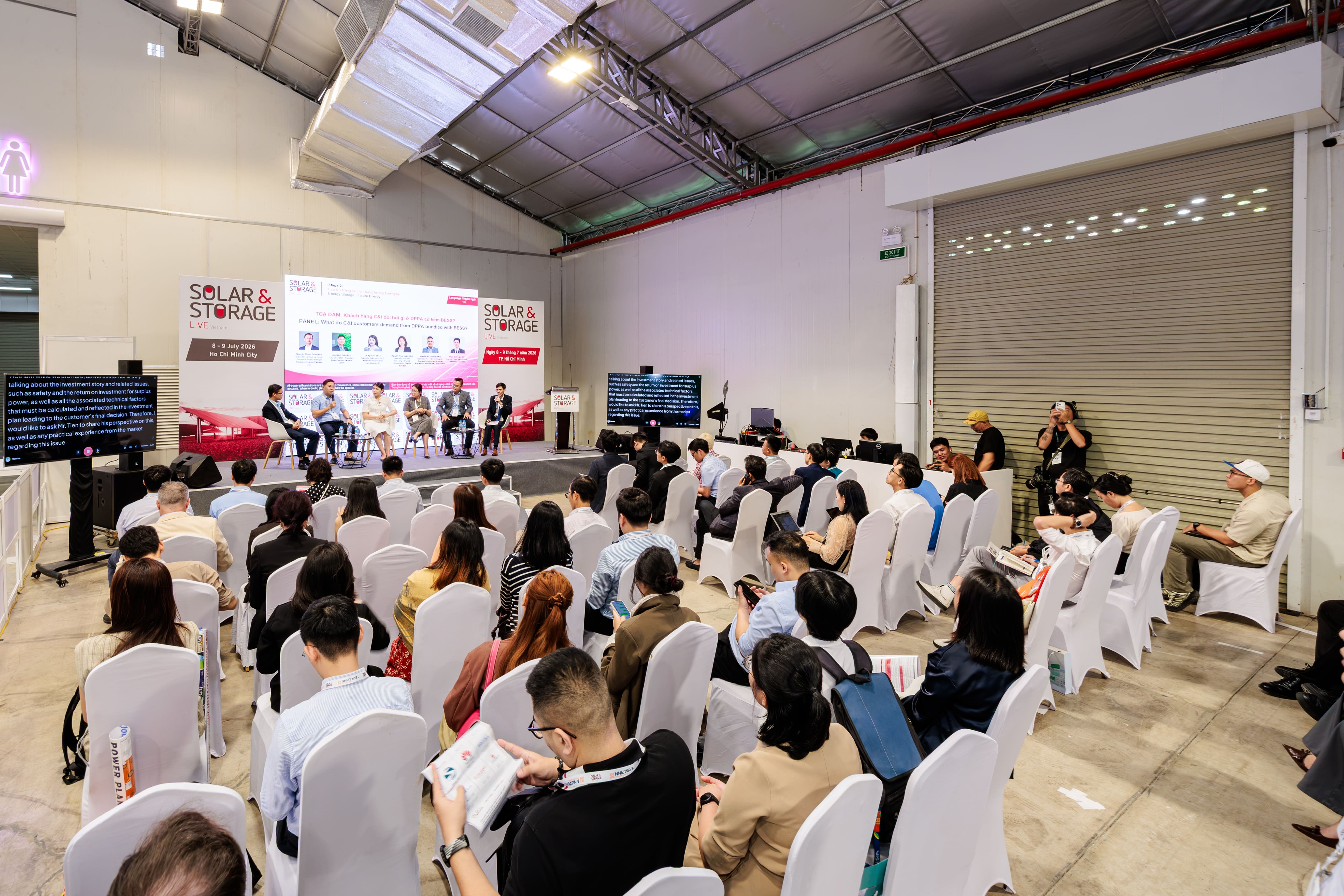
Insights shared during the panel discussion suggest that the industry's most pressing challenges remain remarkably consistent.
Among the issues most frequently raised were:
- grid connection and network-related costs under the Corporate DPPA (CDPPA) model;
- uncertainty surrounding certain payment components;
- regulatory risks associated with long-term contracts; and
- coordination challenges among industrial park operators, project developers, EPC contractors, NSMO, local authorities, and end users.
The discussion also highlighted the need for more comprehensive technical guidelines governing BESS deployment, as well as incentive mechanisms to compensate battery systems for providing ancillary grid services such as frequency and voltage regulation. In many cases, projects do not stall because of technological limitations. Rather, they are delayed because commercial structures, contractual responsibilities, and risk-sharing arrangements remain insufficiently defined for customers to make investment decisions with confidence. This explains why, for many C&I customers that are not yet prepared to commit substantial capital expenditure (CAPEX), third-party ownership and operation models are gaining increasing attention as a practical solution over the next one to three years.
Whether these models are structured as ESCO, long-term PPA, or Energy-as-a-Service (EaaS) is ultimately less important than the value they deliver. When evaluating such solutions, businesses consistently focus on three straightforward questions:
- How will the total cost of energy change over the project's lifetime?
- Can the promised performance be guaranteed with confidence?
- If the expected outcomes are not achieved, who assumes responsibility?
An export-oriented manufacturer located in an industrial park may be eager to accelerate its transition toward renewable electricity. However, it must also prioritize capital for production expansion, new customer orders, and investments in its core manufacturing processes.
Consequently, business models that allow companies to realize the benefits of renewable energy without bearing the full investment risk upfront are likely to gain wider market acceptance. Even so, these models can only succeed if they provide clear answers regarding project costs, operational responsibilities, and long-term performance commitments.
The evolving electricity market in Vietnam further reinforces the urgency of these issues.
According to the National Power System and Market Operator (NSMO), the national power system reached a record peak demand of approximately 58,456 MW at 1:50 p.m. on 24 June 2026. Compared with the same period in 2025, peak demand increased by 13.5%, while Northern Vietnam alone recorded a historic peak of approximately 30,300 MW, requiring the dispatch of all available generation resources to maintain system reliability. These figures demonstrate that businesses are no longer focused solely on reducing electricity costs. They must also strengthen their ability to manage demand, enhance operational resilience, and adapt to an increasingly constrained power system.
Against this backdrop, the true value of DPPA and BESS lies not simply in adding another renewable energy technology but in transforming renewable electricity into an energy source that businesses can use reliably, manage effectively, and verify transparently as part of their manufacturing operations. Ultimately, today's C&I customers are not seeking DPPA combined with BESS merely to stay ahead of market trends. Increasingly, they view these solutions as essential components of long-term business competitiveness. However, for this model to scale successfully, the market needs more than supportive policies. It requires commercial structures that provide confidence for customers to sign long-term agreements, assurance for investors to commit capital, and a stable foundation for projects to operate sustainably over the long term. Only then will DPPA and BESS truly evolve from a policy opportunity into a proven business solution.
![[WBN 03 - Part 03] EMS: Data-driven Pmax Control And Energy Management For Factories](/upload/tin-tuc/2025-ban-tin-doanh-nghiep/dien-2-thanh-phan/1785401074464-6914433568007851552-g8521094553282089876-93448f980574a926c283de0ecb35c37f-800x0.jpg)
