

The 2026 Cost Storm: How Construction Businesses Can Control Costs and Protect Profitability

As geopolitical conflict in the Middle East continues to escalate, the global energy market is entering a period of strong volatility. The rapid increase in fuel prices is no longer just an isolated cost factor, but is creating a “multi-layered storm” that directly impacts the entire value chain of the construction industry.
In Vietnam, these fluctuations are putting businesses in front of a much bigger challenge: not only adapting, but also restructuring the way they operate in order to survive and develop sustainably.
Multi-layered impacts: When macro volatility reaches every construction site
Energy price fluctuations do not stop at fuel costs, but spread through a domino effect across multiple layers:
A sharp increase in operating costs
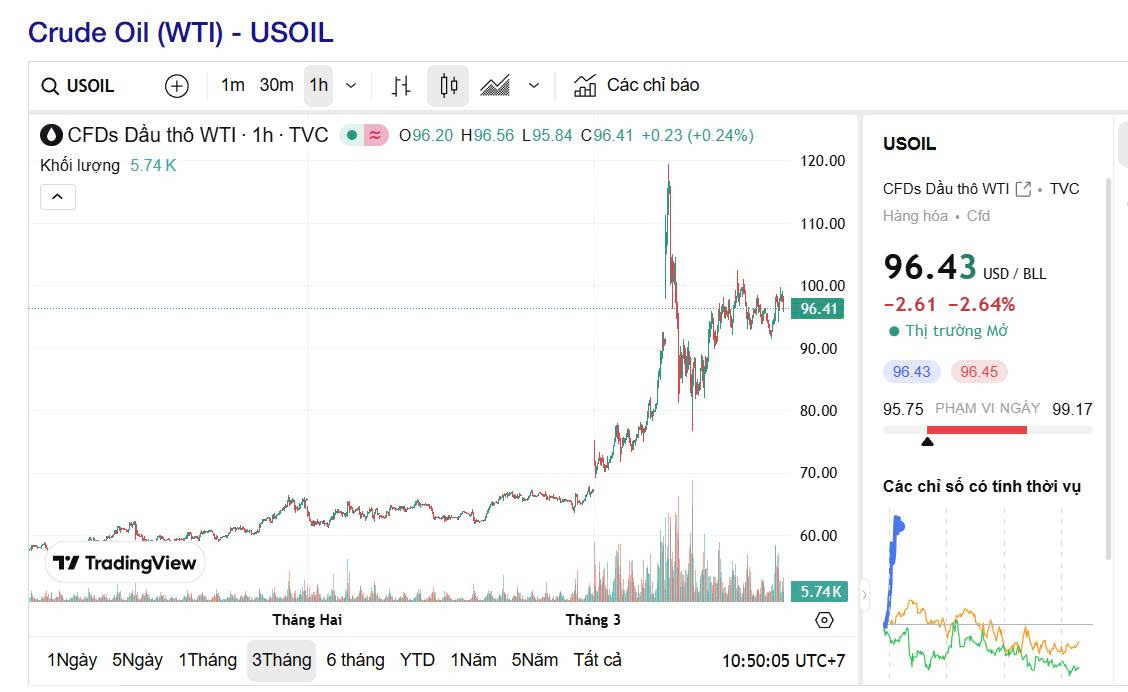
Since late February 2026, gasoline prices have increased by around 33%, while diesel prices have risen by as much as 44–45%. This has led to a strong increase in equipment operating costs and logistics costs, becoming the trigger for a chain reaction of price increases across the industry.
Pressure on construction materials
Concrete and raw material group: Concrete prices are expected to increase by 5–12% (equivalent to VND 60,000–90,000/m3), while sand, stone, and gravel are projected to rise by 10–12% due to higher transportation and extraction costs.
Steel and metal group: Steel and metals are under pressure from both energy costs and exchange rates, with a projected increase of 3–5%.
Schedule risks are becoming more evident
Instability in transportation and the global supply chain is prolonging delivery times, increasing the risk of schedule delays and additional contractual costs.
Businesses are facing systemic risks
From an operational perspective, the “price storm” does not only increase costs, but also exposes systemic weaknesses:
Cash flow pressure: Rising material costs force businesses to increase working capital, while payment progress is often delayed.
Contract risk: Lump-sum contracts without price adjustment clauses become a factor that erodes profits when fluctuations exceed contingency levels.
Supply chain disruption: Financially weak suppliers may be unable to maintain commitments or may stop supplying because they cannot withstand the pressure of rising prices.

In this context, a short-term reactive approach is no longer enough. Businesses need a proactive management strategy based on data and systems.
From “reaction” to “proactive management”: NSN’s approach to the cost challenge
With implementation experience and a system-based cost management mindset, NSN believes that current volatility is not only a challenge, but also an opportunity for businesses to restructure their operational capabilities.
At NSN, this challenge is approached through three pillars:
1. Control at the source: Quantity – unit price – planning
Even before project implementation, NSN focuses on:
Carefully reviewing quantities and unit prices
Preparing procurement plans linked to project schedule and cash flow
For large-scale EPC projects, construction drawings are developed at a high level of detail, combined with appropriate tools in order to:
Accurately control quantities
Minimize discrepancies and changes from the outset
This is the foundational step that helps minimize cost risks right from the “starting point.”
2. Control during execution: Stay close to reality – adjust in time
During project implementation, NSN maintains strict operating discipline by:
Establishing weekly reports on completed quantities, cash flow, and project schedule
Continuously comparing plans against actual execution
Identifying deviations early in order to make timely adjustments
3. Risk control: Supply chain and contract management
Procurement strategy plays a decisive role in stabilizing costs.
Solutions include:
Proactively negotiating fixed-price contracts with strategic partners
Establishing price adjustment and exchange-rate adjustment clauses in contracts
Building a supplier ecosystem with strong financial capability
This approach helps businesses not only reduce risks, but also maintain flexibility in a volatile environment.

Turning challenges into competitive advantage
The “price storm” is a clear test of the management capability of construction businesses.
At this stage, the difference does not lie in who is less affected, but in who can better control data, operations, and strategy.
“In times of volatility, businesses do not lack data — they lack the ability to make the right decisions at the right time based on that data.”
With the approach of a general contractor, NSN accompanies businesses from design and construction to operational optimization, helping them to:
Control costs
Reduce risks
Move toward sustainable development
Volatility is unavoidable. But the way businesses respond will determine their position in the future.
Instead of being swept away by the “price storm,” businesses that proactively transform, master data, and optimize operations will be the ones that create long-term competitive advantage./.
Ms. Tran Thao Hoa _ Head of Procurement
Related news
NSN enters a new phase of growth