


[WBN 02_Part 3]: Two-part electricity pricing: three short-term solutions to control electricity costs by managing Pmax

Once the causes of Pmax rising have been identified, the next question every business asks is: "What can we do immediately?" The good news is that, in many cases, the first optimization opportunities come from improving operational practices rather than replacing equipment.
1. Stagger the Startup of High-Power Equipment
One of the most practical and effective solutions is to stagger the startup of large electrical loads. Instead of starting chillers, air compressors, and production lines at the same time, businesses can schedule them to start at intervals of five to ten minutes. Although this time difference may seem insignificant, it can substantially reduce the maximum demand recorded by the electrical system.
2. Shift Non-Critical Electrical Loads
Another effective approach is to review operational activities and move non-essential electrical loads away from periods when peak demand is most likely to occur. For example, supporting activities such as charging electric forklifts, operating standby pumping systems, or carrying out non-production processes can be rescheduled to off-peak periods. This helps distribute electrical demand more evenly throughout the day without affecting production efficiency.
3. Eliminate Unnecessary Base Loads
Businesses should also review continuous base loads that consume electricity without creating corresponding operational value. In many factories, lighting systems, ventilation fans, HVAC systems, or air compressors continue running even when the production area is not in use. These unnecessary loads not only increase electricity consumption but also contribute to maintaining a higher baseline demand, ultimately driving up Pmax.
Case Study
At NSN, we successfully implemented a Smart Lighting solution for an F&B factory in Dong Nai province, helping reduce electricity consumption for the Technical Store's lighting system by 89%.
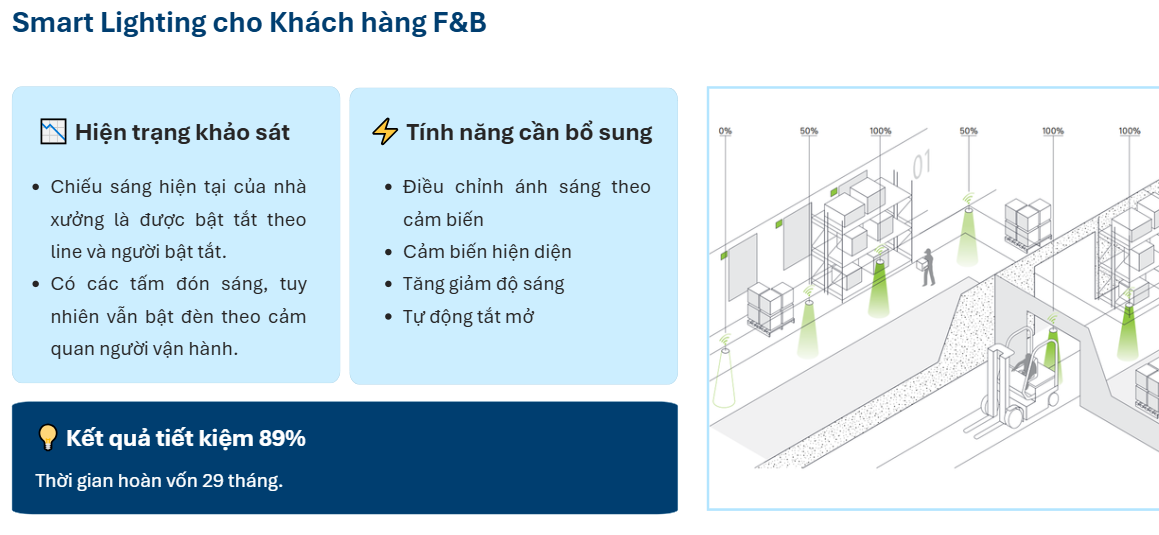
However, even after implementing all possible operational improvements to reduce Pmax, businesses may find that peak demand still does not reach the desired level. This should not be viewed as a failed outcome. On the contrary, the greatest value lies in gaining reliable operational data that reveals how the electrical system actually performs, where the bottlenecks exist, and the extent to which Pmax can be reduced through operational improvements alone.
With this information, factory engineers and facility management teams can prepare data-driven reports for company leadership instead of relying on assumptions. More importantly, they can accurately determine when it is appropriate to consider long-term investments such as an Energy Management System (EMS), Battery Energy Storage System (BESS), rooftop solar power, or other integrated energy management solutions. When businesses clearly understand where to invest, why the investment is needed, and what objectives it is expected to achieve, they can significantly reduce the risk of making costly investments that fail to address the root causes of the problem.
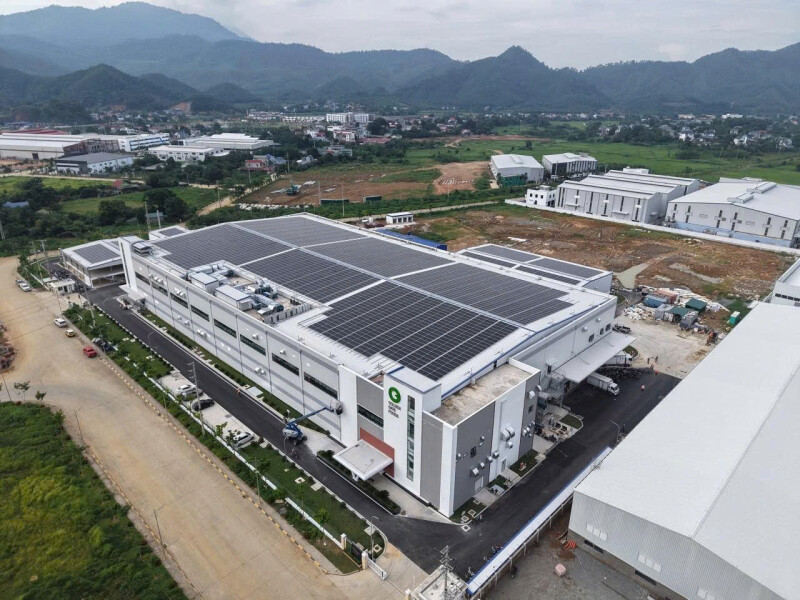
With more than 20 years of experience in designing and implementing MEP systems for industrial facilities, together with over 10 years of experience in renewable energy projects, NSN will share more insights into these long-term energy optimization strategies in our upcoming webinar.
![[WBN 03 - Part 03] EMS: Data-driven Pmax Control And Energy Management For Factories](/upload/tin-tuc/2025-ban-tin-doanh-nghiep/dien-2-thanh-phan/1785401074464-6914433568007851552-g8521094553282089876-93448f980574a926c283de0ecb35c37f-800x0.jpg)
