


[WBN 02_Part 2] Two-part electricity pricing: 3 Common causes of high Pmax

In the previous article, NSN explained why Peak Demand (Pmax) will become one of the key factors determining factory electricity costs under the upcoming two-part electricity pricing mechanism. However, one question concerns many businesses even more: why does Pmax increase significantly even when total electricity consumption remains almost unchanged?
Based on NSN's experience surveying and consulting for numerous industrial facilities, Pmax rarely increases because of a single issue. Instead, it is usually the result of multiple operational factors working together. Some causes are easy to identify, while others are "hidden losses" that have existed within the electrical system for years without being noticed. Identifying the factors that increase Pmax is the first step for businesses to proactively control their future electricity costs.
1. Poor Power Quality Increases Electrical Losses and Peak Demand
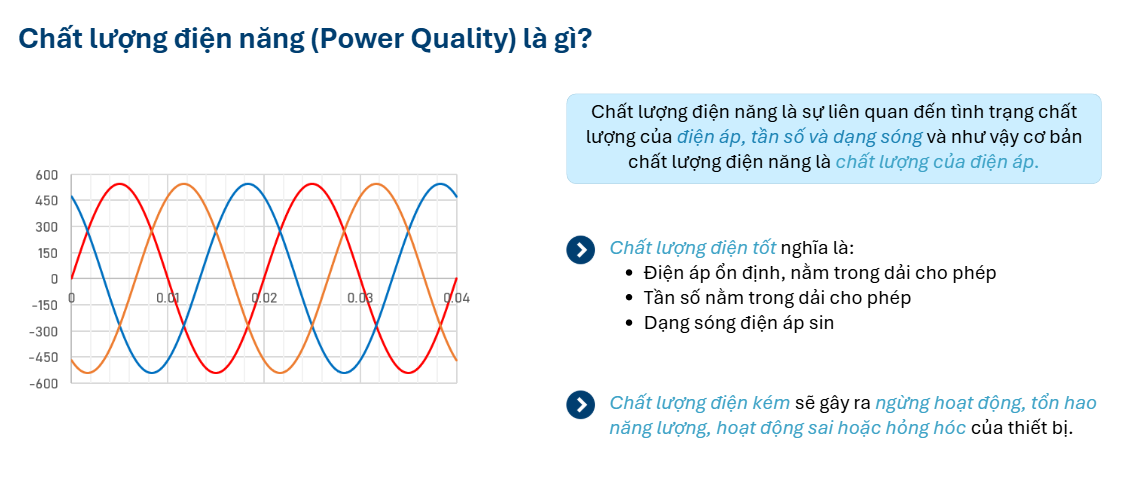
Many businesses assume that as long as their electrical system is operating normally, power quality is not a concern. However, from an engineering perspective, poor power quality is one of the major contributors to higher Pmax.
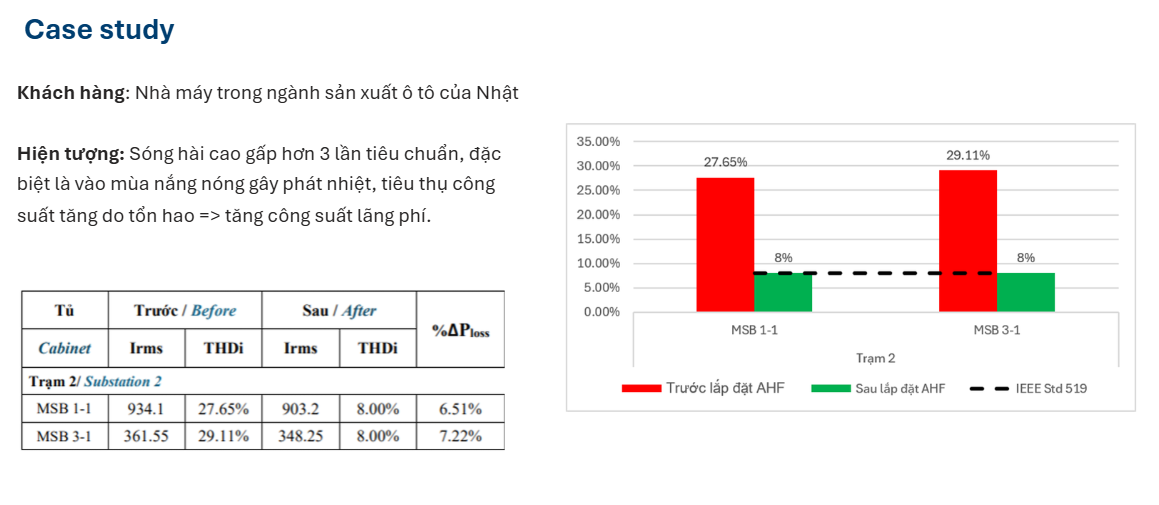
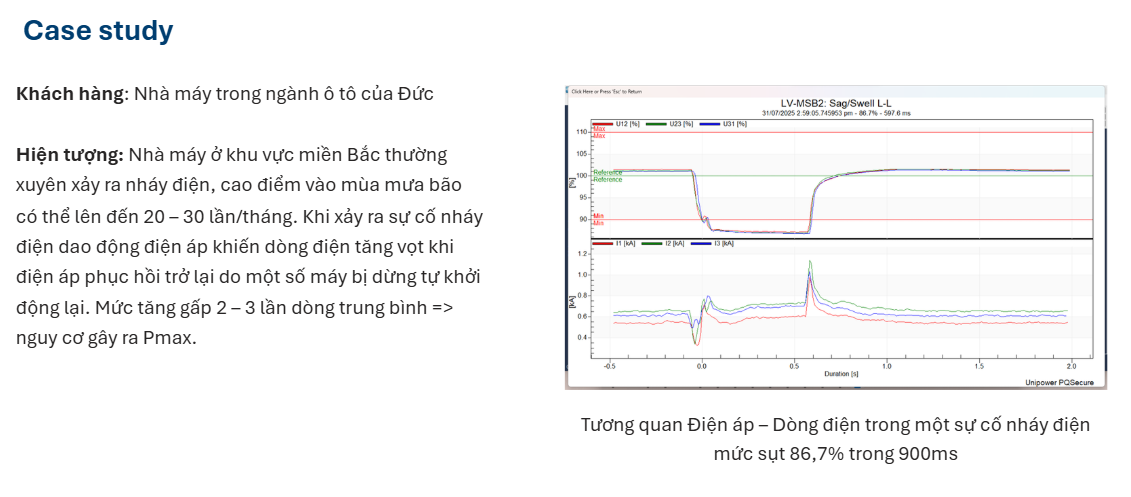
Issues such as harmonic distortion, voltage sag, voltage fluctuation, phase imbalance, and a low power factor (cosφ) force electrical equipment to draw more power in order to produce the same level of output. Although this additional power does not create any extra production value, it is still recorded by the electrical system, increasing energy losses and directly contributing to higher peak demand.
2. Simultaneous Startup of Multiple High-Power Equipment
This is the most common reason why factories experience sudden spikes in Pmax. During operation, equipment such as chillers, air compressors, water pumps, electric furnaces, and production lines often require a startup current that is several times higher than their normal operating current. When several large loads are started simultaneously within a short period, the factory's total power demand can surge and create a peak load.
In practice, this situation frequently occurs at the beginning of a production shift, after lunch breaks, or when manufacturers accelerate production to meet delivery deadlines. A single period of uncontrolled operation can significantly increase the monthly Pmax, resulting in higher electricity costs even though total energy consumption has changed very little. This is why businesses should monitor their load profile in real time rather than focusing only on the total monthly electricity consumption shown on the utility bill.


3. Non-Optimized Equipment Operation and Unnecessary Electrical Loads
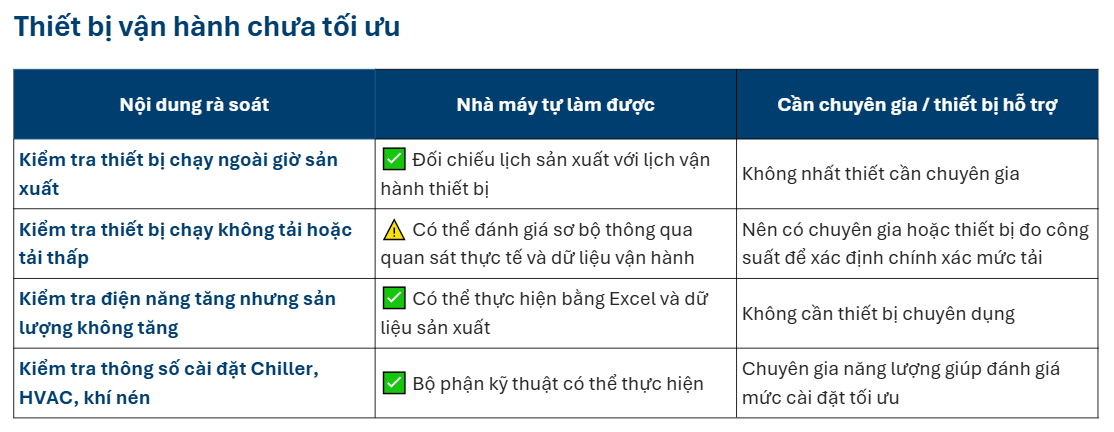
Not all of the electricity consumed by a factory directly supports production activities. In many cases, a high Pmax is caused by electrical loads that are not operating efficiently.
For example, chillers may run under low-load conditions, air compressors may maintain pressure levels that exceed actual production requirements, HVAC systems may operate across the entire facility even though only part of the area is occupied, or lighting and ventilation systems may continue running outside necessary operating hours. These unnecessary loads increase the facility's base electricity demand and push peak demand higher than actual operational needs.
According to NSN's assessment, this is the group of issues that businesses can improve most quickly without necessarily investing in new equipment. Simply reviewing operating procedures and optimizing how electricity is used can significantly reduce both Pmax and overall electricity costs.
Pmax Can Be Controlled with the Right Operational Data
The common characteristic of all three causes above is that they can be identified if businesses continuously monitor the operational data of their electrical systems.
Instead of relying solely on the monthly electricity bill, businesses need to know exactly when Pmax occurs, which equipment is operating at that moment, and what factors are causing the sudden increase in demand. Once the data is properly analyzed, it becomes much easier to identify which areas should be prioritized for optimization while avoiding unnecessary investments. In other words, Pmax is not a metric that is difficult to control. It is simply a performance indicator that needs to be measured and managed just like any other critical operational KPI within a factory.
Conclusion
As the two-part electricity pricing mechanism approaches implementation, understanding the factors that increase Peak Demand (Pmax) will enable businesses to take a more proactive approach to controlling electricity costs. From power quality and equipment startup practices to daily operational procedures, each factor can have a significant impact on a factory's electricity bill.
In the next article, NSN will introduce three practical short-term solutions that businesses can implement immediately to control Pmax and reduce electricity costs without affecting production operations.

![[WBN 03 - Part 03] EMS: Data-driven Pmax Control And Energy Management For Factories](/upload/tin-tuc/2025-ban-tin-doanh-nghiep/dien-2-thanh-phan/1785401074464-6914433568007851552-g8521094553282089876-93448f980574a926c283de0ecb35c37f-800x0.jpg)
