


[WBN 02_Part 1] Two-Part Electricity Pricing: How Will Pmax Impact Factory Electricity Costs?

As Vietnam moves toward implementing a two-part electricity pricing mechanism, Peak Demand (Pmax) will become a key factor directly affecting factory electricity costs. What should businesses understand today to prepare and optimize their future energy expenses?
Pmax Is Becoming a Critical Metric for Every Factory
When discussing electricity costs, most manufacturing companies typically focus on one familiar question: How many kilowatt-hours (kWh) did the factory consume this month? This approach has been entirely reasonable because, for many years, electricity bills have been calculated primarily based on energy consumption. However, under the roadmap outlined in Vietnam's Electricity Law, the upcoming two-part electricity pricing mechanism will introduce another factor that directly impacts operating costs: Peak Demand (Pmax).
In other words, future electricity management will no longer be determined solely by how much electricity a company consumes. It will also depend on how and when electricity is used throughout the production process. As a result, an increasing number of factories are beginning to monitor load profiles, analyze operational data, and explore demand management solutions before the new pricing mechanism is implemented on a wider scale.
What Is Pmax and Why Does It Affect Electricity Costs?
Simply put, Pmax represents the highest level of electrical demand recorded within a specified period. Under the proposed mechanism, peak demand is expected to be measured based on the highest average power demand recorded during a 30-minute interval. What makes Pmax particularly important is that it does not reflect how much electricity a business consumes over an entire month. Instead, it reflects the maximum capacity that the national power system must be prepared to supply at any given moment.
For example, a factory may operate at a relatively stable load for most of the month. However, if multiple high-power machines are started or operated simultaneously during a certain period, the facility may experience a significant demand spike. This single peak can become the basis for calculating demand charges under the two-part electricity pricing model. In other words, a short period of uncontrolled operation could create financial consequences that extend throughout the entire billing cycle.
Why Does the Power Industry Need to Charge for Demand Capacity?
Many businesses ask a reasonable question: if they are already paying for the electricity they consume, why should they also pay an additional demand charge? In reality, to meet customers’ electricity needs, utility providers must invest not only in power generation but also in transmission networks, substations, transformers, and related infrastructure to ensure sufficient capacity is available to meet peak demand requirements. This means that even if a business only requires a very high level of power for a short period, the power system must still be designed and maintained to supply that demand whenever it occurs.
For this reason, the two-part electricity pricing mechanism is designed to more accurately reflect the actual costs of operating the power system while encouraging customers to use electricity more efficiently and reduce unnecessary demand peaks.
Two Types of Businesses Will Experience Very Different Impacts
Based on NSN's experience working with industrial facilities, not all manufacturers will be affected in the same way once the new mechanism takes effect.
Group 1: Factories with stable operations
This group typically includes facilities operating continuously across two or three shifts with relatively consistent load profiles and limited demand fluctuations. These factories are generally in a favorable position because their peak demand remains relatively close to their average electricity usage. In many cases, the anticipated reduction in energy charges—estimated at approximately 25% to 33% compared to current rates—may significantly offset the additional demand charges introduced under the new pricing structure.
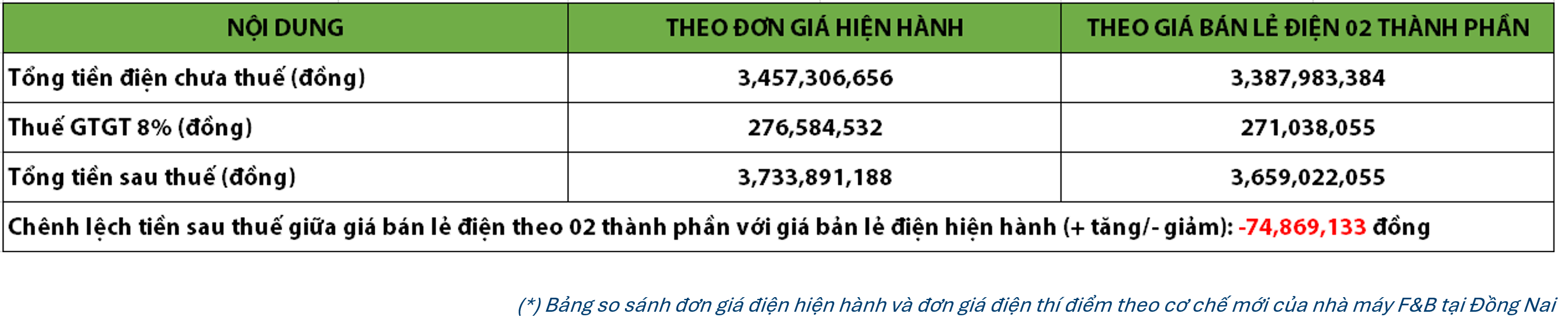
Group 2: Factories with highly variable loads
The second group includes businesses with highly fluctuating load profiles throughout the day. Simultaneous startup of multiple large electrical loads, production concentrated within certain operating hours, or a lack of demand management tools can all cause Pmax to increase significantly. In such cases, electricity costs may rise considerably even if total energy consumption remains largely unchanged. This highlights an important reality: under the two-part pricing mechanism, the determining factor is no longer factory size or total energy consumption. Instead, it is the organization's ability to monitor, manage, and control peak demand.
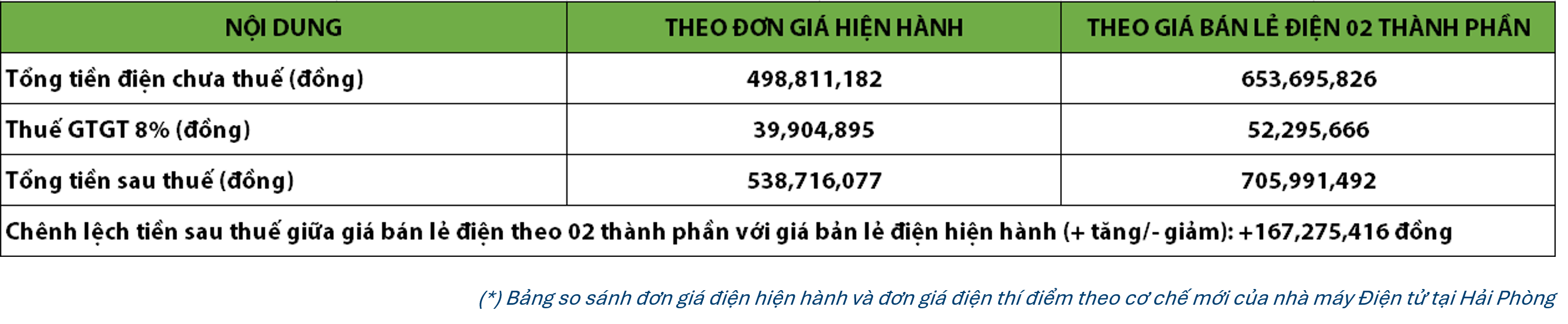
Pmax Will Become a Key Indicator for Electricity Cost Control
In the past, many businesses focused primarily on reducing total electricity consumption. Under the new framework, however, energy management will require an additional objective: controlling peak demand. This means that engineering, maintenance, and operations teams must develop a clear understanding of the factory’s load profile, identify exactly when Pmax occurs, and determine what factors are causing demand spikes. Only by measuring and monitoring operational data can businesses make informed optimization decisions based on facts rather than assumptions.
Conclusion
Two-part electricity pricing is more than a change in billing methodology. It represents a shift from a traditional focus on electricity consumption to a broader approach centered on energy management. In this new environment, Pmax will become a critical factor influencing operating costs, energy efficiency, and long-term competitiveness. Factories that can effectively manage and reduce peak demand will be better positioned to optimize electricity costs, improve operational efficiency, and respond proactively to changes in the energy market.
In the next article, NSN will explore the most common causes of high Pmax and explain how hidden demand spikes can silently increase factory electricity costs—even when overall energy consumption remains virtually unchanged.

![[WBN 03 - Part 03] EMS: Data-driven Pmax Control And Energy Management For Factories](/upload/tin-tuc/2025-ban-tin-doanh-nghiep/dien-2-thanh-phan/1785401074464-6914433568007851552-g8521094553282089876-93448f980574a926c283de0ecb35c37f-800x0.jpg)
