


[WBN 01_Part 4] Two-component electricity pricing mechanism – What should factories do to be ready?

After going through the first three parts on electricity cost challenges under the two-component pricing mechanism, in this final article, NSN summarizes practical solutions that businesses can implement immediately—ensuring accuracy, effectiveness, and alignment with their budget.

Based on practical experience, NSN identifies four core solution groups that enterprises should adopt.
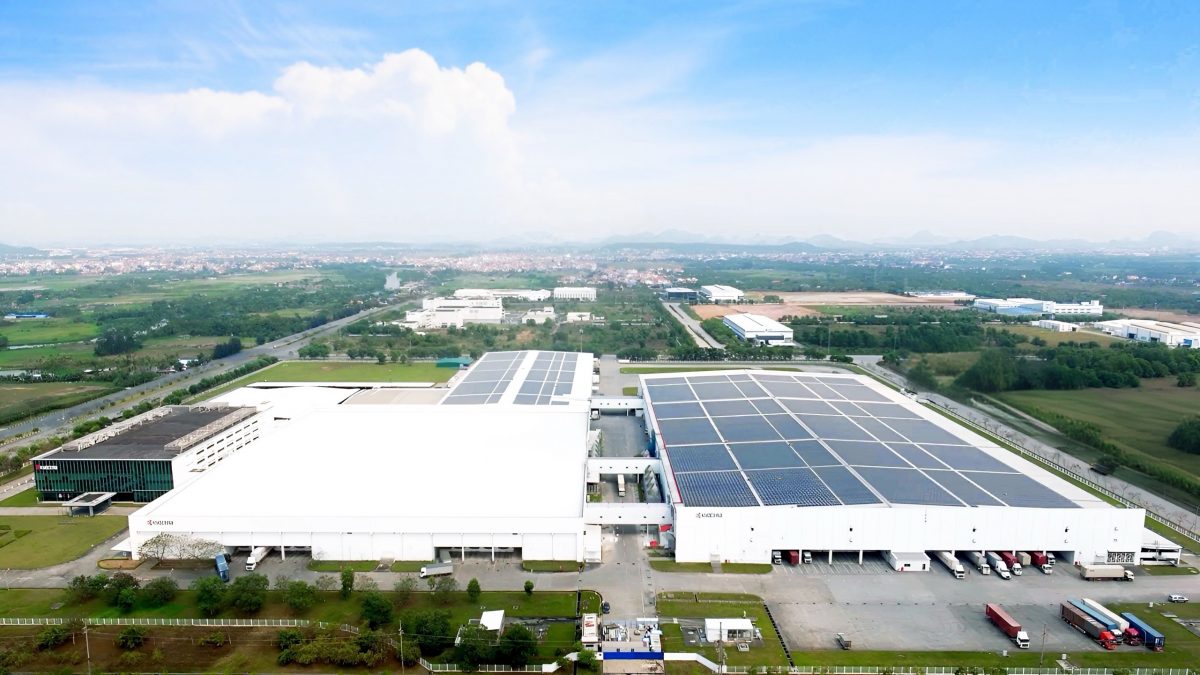
1. Rooftop Solar + BESS: Reducing Pmax at the source
The combination of rooftop solar and Battery Energy Storage Systems (BESS) helps businesses both reduce energy consumption and proactively cut peak demand.
First, why combine solar power with energy storage?
For two key reasons:
- Rooftop solar mainly generates electricity during midday when solar irradiation is highest, helping reduce energy drawn from the grid and lowering energy charges.
- However, maximum demand from the grid remains nearly unchanged, and excess generation cannot be stored for use during peak hours, often leading to curtailment. Therefore, BESS is required to limit peak demand and avoid wasting excess capacity.
Case study: One NSN client had already installed rooftop solar. After learning about the two-component pricing mechanism, they requested NSN to optimize their electricity costs. Through site survey, measurement, and cost simulation under two scenarios (with and without BESS), NSN provided a detailed analysis, which was approved by the client.
However, this is not simply about installing solar panels and BESS. In reality, most enterprises lack in-house expertise in solar systems and rely entirely on contractors. Meanwhile, many contractors understand solar technology but not factory operations. This misalignment often results in rooftop solar being treated as an “add-on” rather than an integrated part of the overall electrical and M&E system.
The consequence is clear: systems perform well in the first 1–2 years, but later issues arise. Factories may not know actual system performance, whether energy savings meet initial design expectations, or how to manage maintenance effectively. At that point, correction costs can exceed initial investment costs.
For businesses considering rooftop solar, five key criteria should be used when selecting a contractor:
- Understanding of roof structure, materials, and building lifespan
- Strong knowledge of electrical and M&E systems
- Proper system sizing and installation layout aligned with production characteristics
- Compliance with international construction standards
- Most importantly: holistic optimization, not partial optimization.
With over 20 years of M&E consulting experience and 10 years in renewable energy, NSN supports businesses in designing solar systems that truly integrate into factory operations and optimize costs under the new pricing mechanism.
2. Operational optimization: Reducing pmax without affecting production
If electricity is like a flow, operations determine how that flow is controlled. The key objective is to manage load over time to avoid demand spikes.
2.1. Restructuring production schedules
- Review high-energy-consuming processes
- Avoid simultaneous operation of large equipment
- Distribute operations across different time periods
- Prioritize off-peak or normal hours where possible
- Result: Reduced load concentration, leading to lower Pmax.
2.2. Applying EMS (Energy Management System)
- Set target Pmax
- When load approaches limits: automatically discharge BESS or limit grid consumption
- Establish time-based operation scenarios
- Result: Real-time Pmax control, reduced reliance on manual intervention.
2.3. Eliminating unnecessary loads
- Review auxiliary systems (HVAC, lighting, standby equipment)
- Turn off non-essential loads during peak periods
- Standardize operations to avoid idle running
- Result: Reduced base load, supporting peak reduction.
3. Equipment upgrades: Optimizing system efficiency
This is a long-term solution to reduce total energy consumption and prevent sudden demand spikes.
3.1. Replacing with high-efficiency equipment
- High-efficiency chillers
- Variable speed air compressors
- IE3/IE4 motors
- Prioritize equipment with low starting current or integrated inverters.
Result: Reduced energy consumption and limited Pmax spikes.
3.2. Reducing internal system losses
- Optimize electrical distribution systems
- Check transformer losses
- Balance phases
- Control power factor (cosφ)
Result: Reduced hidden losses and improved overall system efficiency.
4. Peak demand control: Direct impact on electricity costs
This solution group has the most direct impact on electricity bills.
4.1. Adjusting production schedules
- Limit operation of large loads during peak hours
- Shift loads to off-peak periods where possible
4.2. Controlling equipment start-up sequence
- Establish start-up order for major equipment
- Apply time delays between large loads
4.3. Pmax monitoring and control via EMS
- Set warning thresholds
- Monitor load in real time
- Automatically shed or reduce non-critical loads when necessary
In today’s context, electricity costs are no longer a fixed expense—they are becoming a strategic variable. Businesses that prepare early can turn electricity costs into a competitive advantage, while those that delay will face significantly higher operational expenses in the future. If your organization is starting to explore this topic, NSN can support you from the very beginning: from consulting on proper Pmax monitoring in line with EVN’s methodology to on-site assessment and proposing optimal rooftop solar capacity and installation layout aligned with your production characteristics.
![[WBN 03 - Part 03] EMS: Data-driven Pmax Control And Energy Management For Factories](/upload/tin-tuc/2025-ban-tin-doanh-nghiep/dien-2-thanh-phan/1785401074464-6914433568007851552-g8521094553282089876-93448f980574a926c283de0ecb35c37f-800x0.jpg)
